



Carbon dioxide (CO2) emissions primarily occur when fossil fuels are combusted in industrial production, transportation, and household consumption [1]. These emissions contribute significantly to global warming and are a major driver of critical issues, such as climate change, environmental degradation, and air pollution. These challenges pose a global problem with profound and far-reaching implications for ecosystems, societies, and economies.
Concerns over CO2 emissions were first highlighted at the 1992 Earth Summit in Brazil, where the international community adopted the United Nations Framework Convention on Climate Change (UNFCCC). This foundational agreement was further strengthened by the 2016 Paris Agreement, a pivotal milestone in climate policy. Under the Paris Agreement, almost all nations pledged to decrease greenhouse gas emissions and restrict the increase in world average temperatures to under 2 °C [2]. Additionally, the Intergovernmental Panel on Climate Change (IPCC) published a 2023 special report on global warming. It underscored the urgent need for immediate global action to avert the repercussions of climate change that will result from increased emissions [3].
Previous studies have established that the rise in CO2 emissions is a primary result of growth based on fossil fuel consumption [4], [5]. Fossil fuels, including oil and natural gas, presently satisfy almost 80% of worldwide energy requirements, while coal accounts for nearly 50% of the world’s electricity supply [6]. Due to the environmental consequences associated with fossil fuels, this dependency has generated significant concern among the public, researchers, and policymakers. Transitioning to cleaner energy systems has been identified as a critical strategy to mitigate emissions [7], [8]. Such systems include nuclear, wind, and solar energies, which have substantially lower carbon footprints than coal and oil. Because these sources do not generate CO2 during energy production, they are considered sustainable solutions for reducing environmental degradation [9], [10]. Thus, while economic growth continues to rely on energy consumption, the choice of energy source can heavily influence environmental impacts.
However, countries’ increasing reliance on clean energy often creates economic trade-offs, including negative shocks to fossil fuel markets and risks related to energy transitions [11], [12]. This dilemma underscores the need to balance economic development with sustainability. Implementing substantial transitions to cleaner energy systems demands significant financial resources, which remain out of reach for many nations, especially low-income and developing countries [6]. In this context, financial development is a pivotal factor in supporting economic growth, as it provides capital, enhances investment efficiency, and fosters technological innovation [13].
Nonetheless, the environmental implications of financial development are complex. On the one hand, financial growth may enhance environmental quality by fostering investments in cleaner technology and boosting energy efficiency [14], [15]. Sustainable financial practices have the potential to reduce carbon emissions by aligning financial services with environmentally friendly projects and initiatives [16]. On the other hand, financial development can increase energy demand by facilitating consumption and encouraging fixed investments, as well as by boosting investor and consumer confidence through dynamic stock markets. Consequently, financial development can stimulate economic activity and energy use [17]. Easing financial constraints for businesses, financial institutions, and markets enables firms to expand production. This rise in energy demand, linked to financial inclusion, may ultimately result in increased CO2 emissions [18].
Similarly, foreign direct investment plays a dual role in influencing environmental outcomes. While foreign direct investment can create “pollution havens”, where investors capitalise on low-cost resources, labour, and lenient environmental regulations [19], [20], it can also lead to the “pollution halo” effect, where multinational corporations introduce cleaner energy technologies and practices, thereby reducing marginal costs and enhancing productivity in host economies [21], [22]. These contrasting impacts reflect the complex and dependent relationships between economic factors and environmental quality. It is therefore difficult to balance development and sustainability objectives across different nations.
Nevertheless, previous studies on the relationship between financial development, energy consumption, and CO2 emissions often focus on the overall impact while neglecting asymmetric effects [23], [24], [25]. This is a notable shortcoming because economic factors such as financial development, energy consumption, or foreign direct investment do not always have a homogeneous impact on CO2 emissions. For example, positive changes (growth) in independent factors can lead to an increase in the value of the dependent variable, while negative changes (degradation) can lead to a decrease in the value of dependent variables in asymmetric models [26], [27].
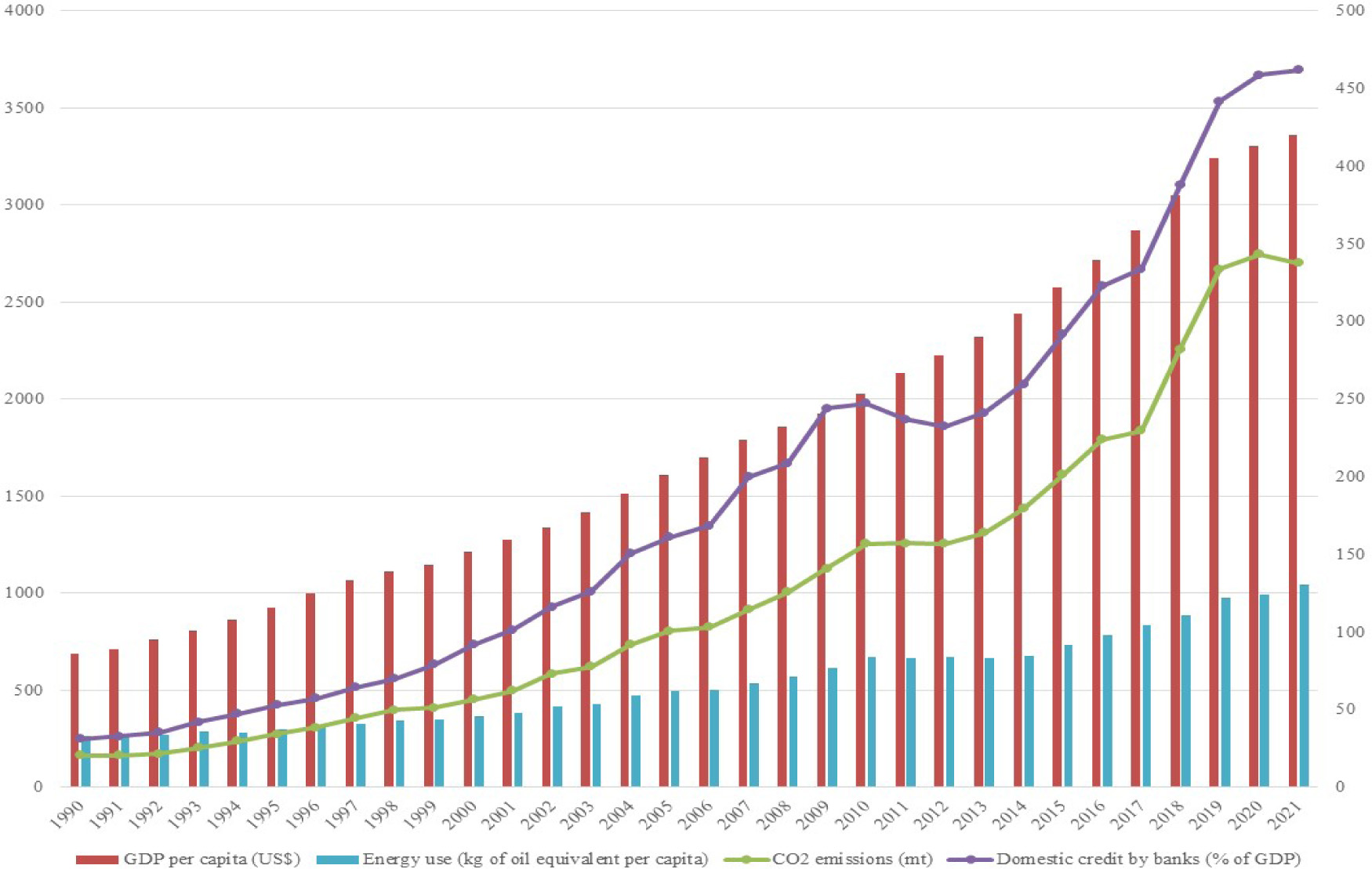
Vietnam is an interesting case for examining these relationships in both theoretical and practical terms. As a developing country with rapid economic growth, Vietnam faces an environmental challenge. Figure 1 illustrates the change in CO2 emissions and economic development in Vietnam in the 1990–2021 period, during which CO2 emissions increased sharply and were observed to have close relationships with economic growth and energy consumption. Furthermore, Vietnam has implemented key policies aimed at balancing economic growth with environmental sustainability. The country is expected to require about 368 billion USD to reach its goal of net zero emissions by 2040. The amount includes the state budget, international funding, and contributions from domestic and foreign enterprises [28]. This target puts pressure on the development of financial markets. Therefore, it is vital for policymakers to consider economic development, energy transition, and long-term environmental protection.
The trend of CO2 emissions and economic factors in Vietnam (Source: World Development Indicator)
Previous studies have not adequately clarified how economic shocks affect emissions in both the short and long term, particularly in developing countries. Compared to developed countries, these nations exhibit significant differences in economic structure, management capacity, and environmental policies. This study aims to address this gap, and its findings will be helpful to policymakers in developing countries which are struggling to achieve sustainable development goals with limited financial resources and technology.
This study utilises Vietnam as a case study to investigate the correlation between financial development, energy consumption, foreign direct investment, and CO2 emissions. For the analysis, a nonlinear autoregressive distributed lag (NARDL) model was employed to examine the impacts of these factors in both the short and long term, adopting an asymmetric perspective. The study makes contributions to the existing literature in three key areas:
This study provides a comprehensive analytical framework for understanding the drivers of economic and environmental sustainability in the context of a developing country. This framework also clarifies the mechanisms behind the varying outcomes observed in previous studies.
The NARDL model allows for analysing the asymmetric effects between the dependent variable and explanatory variables. This empirical method tests whether positive and negative shocks to an independent variable have different impacts on the dependent variable [29]. This approach clarifies the dual roles of financial development, energy consumption, and foreign direct investment, which is crucial for formulating more precise policy recommendations. Additionally, NARDL captures both short-term effects and long-term relationships [30], making it particularly valuable for studying economic dynamics and sustainability impacts over time.
This study’s approach highlights how local circumstances influence the relationship between economic dynamics and environmental sustainability by focusing on a country-specific context. It offers valuable insights for policymakers in other developing nations, allowing them to learn from Vietnam’s experience. These contributions collectively demonstrate the originality of this research, which aims to provide both methodological and contextual advancements in the field.
The paper is organised as follows: Section 2 examines pertinent literature. Section 3 describes data sources, variable estimation methods, and methodological approaches. Section 4 presents the results and their analysis. Section 5 presents conclusions and policy recommendations.
This section focuses on exploring the asymmetric and nonlinear impacts of financial advancement, energy use, and the influx of foreign direct investment on CO2 emissions. Moreover, it describes and addresses a significant gap in the existing literature.
According to Alshagri et al. [16], energy consumption is the primary way that financial development influences CO2 emissions. This relationship operates via two distinct pillars. The first pillar involves a positive association between financial development and energy use. Financial development stimulates economic growth, thereby driving higher energy demand. The second pillar, known as the technology effect, highlights the role of financial development in encouraging countries to develop and adopt energy-efficient technologies, thereby enhancing environmental quality. Hence, the level of energy consumption fluctuates in response to expansions or contractions in financial development, which then impact emissions [31]. However, financial development does not have a uniform impact on emissions, as the effect varies based on the “shocks” within the financial system.
In the first pillar, positive shocks enhance access to external capital flows and affordable credit. These shocks include fiscal easing, investment promotion policies, and commitments to economic openness. Positive shocks bring opportunities for households and firms to buy more products, boosting energy consumption to support economic growth [32]. In addition, positive shocks to financial development can encourage countries to prioritise highly profitable but environmentally harmful industries [33]. As a result, financial development in developing countries can worsen environmental deterioration [34]. Without strong institutions, such development may fund harmful industries instead of sustainable projects [35]. Moreover, credit expansion reduces financing constraints, boosting economic output and energy consumption and intensifying ecological stress and footprints [36]. Conversely, negative shocks, such as financial crises or strict investment policies, can decrease energy consumption. Under these conditions, businesses tend to reduce their activities, and consumers limit their spending due to concerns over restricted credit access and reduced future income [37], [38].
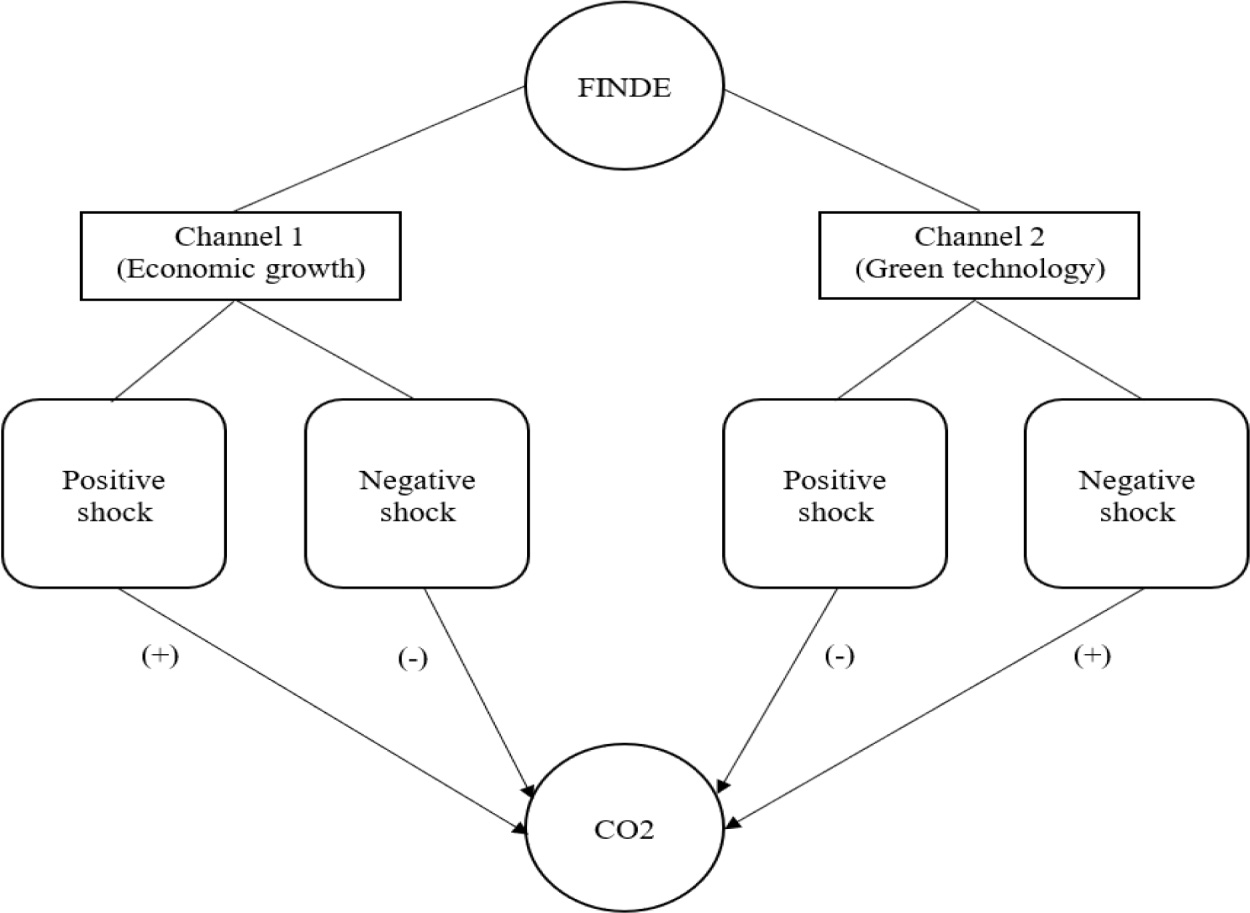
In the second pillar, financial development plays a critical role in promoting environmentally friendly and green technologies. It can provide a positive shock that efficiently mobilises capital and strengthens the financial capacity of enterprises, which may promote sustainability by facilitating investments in green technology innovation and efficiency [39]. Advanced financial mechanisms, such as green credits, green bonds, and environmental investment funds, have incentivised enterprises to adopt cleaner production methods [40], [41]. However, negative shocks to financial development, such as financial crises, often cause financial institutions to become risk-averse. Under these circumstances, they may focus on low-risk projects at the expense of clean technology investments, which may in turn affect CO2 emissions [32], [42]. Such projects are critical for reducing emissions, but they are typically associated with higher risks and longer payback periods, which may limit their financial support [43], [44]. As a result, both positive and negative shocks within both channels can significantly affect environmental quality. Figure 2 illustrates the asymmetric effects of financial development on CO2 emissions through these two distinct pillars.
The asymmetric impacts of financial development (FINDE) on CO2 emissions in the literature
In the empirical literature, research consistently demonstrates that financial development has complex and often contradictory impacts on environmental quality, particularly CO2 emissions. Two primary viewpoints emerge: one highlights the environmental benefits of financial development, and the other emphasises its potential to exacerbate environmental degradation. These mixed outcomes reflect underlying gaps in scholarly understanding of the complex relationship between financial development and emissions.
On the one hand, several studies argue that financial development can improve the environment, primarily by facilitating investments in green technologies and sustainable projects. For instance, Lee et al. [45] find a significant negative association between financial development and CO2 emissions. They attribute this beneficial outcome to effective financial management that supports cleaner production practices. Similarly, Sheraz et al. [46] provide evidence that financial development significantly reduced emissions among G20 nations from 1986 to 2018. This positive environmental effect often arises from advanced financial instruments, such as green bonds and credits, which are crucial for funding low-carbon initiatives [40], [47]. Collectively, these studies emphasise the “green technology” channel, suggesting that positive shocks to financial development encourage investments in sustainable technologies, thereby curbing emissions.
In contrast, a substantial body of research reveals that financial development can increase environmental degradation, as it generates increased economic activity and promotes reliance on fossil fuels. For example, Habiba et al. [23] observe a significant positive link between financial development and CO2 emissions, which they attribute to economic growth patterns driven by carbon-intensive activities. Similarly, Mukhtarov et al. [34] identify financial development as a driver of increased emissions, emphasising that financial expansion frequently stimulates fossil fuel-based production and consumption. These studies emphasise an “economic growth” channel, where financial development facilitates growth that leads to higher emissions. This outcome is particularly notable for economies that rely on traditional energy resources.
Some scholars take another approach, arguing that the environmental impact of financial development is nonlinear and context-dependent. For example, Zioło et al. [48] suggest that whether financial development promotes the adoption of green technology depends significantly on a country’s emission levels. While financial development is beneficial in high-emission countries, it may have limited or even negative effects in lower-emission contexts. Omer et al. [49] and Prempeh [50] offer similar findings, indicating that financial development yields environmental benefits in certain contexts, such as economies heavily reliant on fossil fuels, but shows limited effectiveness in others. Tran [51], in an analysis of 148 countries, emphasises the need to align financial development strategies with environmentally friendly policies. The study reinforces that this relationship can vary depending on context. Similarly, Tao et al. [52], Xiong et al. [53], Patel et al. [54], and Nguyen et al. [55] indicate that nonlinear and asymmetric relationships are present. Thus, both positive and negative financial shocks can significantly influence environmental outcomes across diverse economic settings.
While existing studies have addressed financial development, they primarily focus on its symmetric and linear effects. As a result, they overlook the possibility that positive and negative financial shocks may cause different environmental outcomes. Additionally, previous studies have not attempted to identify these asymmetric effects in both the short and long term. This study addresses these gaps by applying the NARDL model to disaggregate financial development into positive and negative changes, allowing for a more precise assessment of its impacts. Furthermore, although many cross-country analyses have explored the link between financial development and emissions, limited research has addressed the specific context of emerging economies such as Vietnam. This study contributes by providing empirical evidence and policy insights relevant to countries undergoing rapid financial and structural changes, as these places are often overlooked in broader comparative research.
Energy is central to producing, delivering, and consuming essential goods [1], [56], but it predominantly comes from fossil fuels [4], [5]. Although energy consumption is vital for economic development, scholars debate its role in environmental degradation. Indeed, previous studies consistently show that energy consumption is a major driver of ecological degradation, as observed in various contexts, such as groups of nations [24], China [57], and the United States [58]. When energy from fossil fuels is consumed for industrial production, transportation, electricity generation, and household use, it releases CO2 and other emissions into the atmosphere. These emissions contribute to global warming and climate change, particularly in low-developed and developing economies [24], [59]. However, attempts to curtail energy supply can decrease economic performance in various sectors, as noted by Yιldιrιm et al. [60].
Many researchers view transitioning from fossil-based energy sources to renewables as a promising strategy for mitigating environmental damage [9], [10]. Even so, empirical evidence on the effectiveness of renewable energy remains mixed. Some researchers have identified unexpected negative environmental impacts associated with renewable energy use, such as hydropower-induced emissions [61], negative impacts of wind energy on ecosystems and land use [62], [63], and unforeseen ecological effects of geothermal energy [64]. These findings underscore a critical problem: renewable energy consumption may not yield uniformly positive environmental outcomes and can sometimes create unintended ecological consequences.
According to recent evidence, asymmetric and nonlinear effects can increase the complexity of energy’s environmental impact. For instance, Azam et al. [65] highlight the nonlinear influence of diverse energy sources – including nuclear, natural gas, and renewables. Their study demonstrates that renewable energy consumption can effectively reduce CO2 emissions without compromising economic growth. Similarly, Majeed et al. [26] assert that negative shocks (i.e., reductions) in fossil fuel consumption significantly reduce the ecological footprints of countries. Their study emphasises the importance of examining asymmetries in energy-environment relationships. Further reinforcing this perspective, Alshehry et al. [66] incorporate asymmetric effects within an ARDL framework. They demonstrate bidirectional causality between energy consumption and emissions, further illustrating that traditional symmetric analyses may overlook crucial dynamics.
Despite valuable contributions from previous research, several important limitations remain. Many studies rely on linear and symmetric models. Such models assume that energy consumption has uniform environmental effects, regardless of whether energy use increases or decreases, and may fail to capture the complexities of the energy-environment relationship. Furthermore, studies often overlook the asymmetric relationships between fossil and renewable energy consumption in developing countries, leading to a lack of specific policies based on a country’s characteristics. This study uses NARDL and focuses on Vietnam, a developing country undergoing a rapid energy transition, to provide empirical evidence on how shifts in the energy mix influence CO2 emissions under prevailing economic and policy conditions. It is one of the main contributions of this research.
Although the relationship between foreign direct investment and CO2 emissions has been extensively studied, the empirical evidence remains inconclusive, with findings varying across contexts and levels of analysis. The “pollution havens” hypothesis suggests that foreign direct investment inflows may increase emissions by transferring polluting firms to underdeveloped nations with less stringent rules as a way to maintain profitability [19], [20]. Paradoxically, developing countries may have to maintain weak environmental standards to attract foreign direct investment that promotes economic growth, thereby increasing environmental degradation [67]. A clear example is found in the study of Zhang et al. [25], who used the vector error correction model approach to examine the impact of foreign direct investment on China’s CO2 emissions. They found that foreign direct investment exacerbated pollution, validating the “pollution havens” hypothesis for China. Aust et al. [68] also identified a negative relationship between foreign direct investment and the probability of achieving a sustainable climate in 44 African countries. Similarly, Faheem et al. [69] used data from 19702018 to confirm the “pollution havens” hypothesis in Malaysia. In Vietnam, Ngoc et al. [70] considered the role of foreign direct investment and urbanisation in shaping CO2 emissions, and Bui et al. [71] specifically analysed the determinants of nitrous oxide emissions and highlighted the significant role of foreign direct investment. The latter study suggests that while foreign direct investment can drive economic growth and industrialisation, it also has complex implications for environmental quality. Thus, careful management is necessary to mitigate negative environmental impacts.
In contrast, other studies challenge the “pollution havens” narrative or even support the “pollution halo” hypothesis. In the latter hypothesis, scholars argue that foreign direct investment inflows lead host countries to adopt environmentally friendly technologies and management practices that reduce carbon emissions [21], [22], [72]. For instance, Apergis et al. [73] found that foreign direct investment originating from France, Germany, and Italy resulted in lower carbon emissions in BRICS countries between 1993 and 2012. Although foreign direct investment inflows tend to increase CO2 emissions, Huang et al. [74] imply that the level of governance and environmental regulations can mitigate these negative impacts. The authors demonstrate that this occurred for G20 economies during the 1996–2018 period.
Furthermore, Wang et al. [75] assert that foreign direct investment exists in a nonlinear form when the quality and quantity of foreign direct investment inflows are considered. Their study focused on China during the 2006–2016 period. They found that when the quality and quantity of foreign direct investment were low, the level of pollution increased regardless of changes in science and technology. The results indicate that it is vital to improve a country’s science and technology capabilities so it can fully benefit from foreign direct investment inflows. Recently, Wang et al. [27] estimated the impact of foreign direct investment for 67 countries with different incomes and found that the impact on carbon emissions gradually changes from positive to negative at different GDP levels. This finding aligns with the inverted U-shape hypothesis of foreign direct investment with GDP per capita, which indicates that promoting economic growth can reduce the effect that foreign direct investment has on emissions. The above findings emphasise the importance of considering nonlinear models that effectively capture the complex impacts of foreign direct investment on environmental outcomes.
In summary, the literature review has highlighted significant gaps regarding how financial development, energy consumption, and foreign direct investment influence environmental quality, particularly CO2 emissions. Existing literature primarily adopts linear or cross-country methodologies, and as a result, it often neglects the nonlinear impacts of positive and negative shocks on these factors. To address these gaps, this study employs a NARDL model to comprehensively investigate the asymmetric relationships between financial development, energy consumption, foreign direct investment, and CO2 emissions within a unified analytical framework. Specifically, the research hypothesises that financial development, energy consumption, and foreign direct investment each exert asymmetric impacts - either enhancing environmental quality or causing it to deteriorate, depending on the nature and direction of shocks. By focusing on Vietnam, a rapidly developing economy with specific economic and environmental characteristics, this study provides context-specific insights into how financial mechanisms, energy use patterns, and investment dynamics jointly influence emissions through growth and technology channels. Through this integrated nonlinear approach, the research offers significant and robust evidence to support the development of targeted policies for sustainable economic and environmental development.
This section focuses on describing the data, developing econometric models, and demonstrating econometric methods to address the research objectives and provide valid empirical evidence.
The data for Vietnam from 1990 to 2021 was collected using variables sourced from the World Development Indicators (WDI) of the World Bank. The dependent variable CO2 emissions per capita
Variables definition and measurement
Variables |
Definition |
Units |
Source |
|---|---|---|---|
Carbon dioxide per capita |
kt per capita |
WDI |
|
FINDE |
Domestic loan extended to the private sector |
% of GDP |
WDI |
ENERGY |
Energy use |
kg of oil equivalent per capita |
WDI |
FDIIN |
Inflow of foreign direct investment |
% of GDP |
WDI |
GDPPC |
Economic development |
GDP per capita (USD) |
WDI |
In alignment with prior research on the factors influencing
In eq. (1) α represents the intercept, and ε indicates the error term at time t.
The NARDL model, introduced by Shin et al. [77], is highly regarded for its capacity to identify nonlinear relationships and long-run equilibria. It has been widely used in macroeconomic research to examine variables such as inflation, economic growth, and labour markets, revealing nonlinear relationships and long-term equilibrium effects. Consequently, it provides valuable insights into economic phenomena. The NARDL methodology was selected for this study for multiple reasons: (i) it incorporates nonlinear asymmetry and cointegration within a unified equation; (ii) it evaluates the impact of positive and negative variations in decomposed variables on the dependent variable; (iii) it is appropriate for small sample sizes; (iv) it provides flexibility by not necessitating that variables be integrated in the same order; and (v) it operates as a dynamic error correction representation, yielding robust empirical results despite constrained sample sizes. Unlike linear approaches, asymmetric NARDL approaches account for both positive and negative impacts of the explanatory variables on dependent variables [29].
To employ NARDL, this study has to pass tests to examine unit root tests; the augmented Dickey-Fuller (ADF) and Phillips-Perron (PP) tests were used for this purpose [78], [79]. To assess nonlinearity, the study utilised the BDS test, which was published in Broock et al. [80]. The logarithmic transformation of eq. (1) accounts for both increases and decreases in financial development, energy consumption, and foreign direct investment while controlling for economic growth. It is represented as follows:
In eq. (2), α represents the intercept, β denotes the coefficients of the variables, and ε indicates the error term at time t. The study separates financial development, energy consumption, and foreign direct investment into two distinct components: positive partial sums and negative partial sums. Based on this separation, four new time series were constructed as follows.
This study expresses the asymmetric effects of financial development as:
and
This study expresses the asymmetric effects of energy consumption as:
and
This study expresses the asymmetric effects of foreign direct investment as:
and
Then, the NARDL framework of equation can be written as:
In eq. (9), the conventional Wald test is used to evaluate the long-run symmetry (ω2 = ω3 for FINDE, ω4 = ω5 for ENERGY, and ω4 = ω5 for FDIIN) and asymmetry (ω2 ≠ ω3 for FINDE, ω4 ≠ ω5 for ENERGY, and ω4 ≠ ω5 for FDIIN). In the long run, positive coefficients (ω2, ω4, and ω6 > 0) show that increases in FINDE, ENERGY, or FDIIN raise carbon emissions, while negative coefficients (ω3, ω5, and ω7 < 0) indicate that their decreases also significantly increase emissions. Therefore, to compute the short-run NARDL coefficients with an error-correcting procedure, this study utilises the subsequent equation:
In eq. (10), ∅ represents the error correction term, which also shows the long-run equilibrium speed of adjustment after the shock in the short-run, σ, τ, ∩ represent asymmetry coefficients in short-run and ω represents asymmetry coefficient in long-run. Moreover, the conventional Wald test was used to evaluate the short-run symmetry (
Upon confirming a long-term association, the dynamic multiplier effect was assessed. The effects of asymmetric cumulative dynamic multipliers on
In eqs. (11), (12), and (13), h = 0,1,2 ... → ∞, then
This section presents statistical results, empirical analysis, and stability tests of the NARDL model. It also discusses the results and how they relate to previous studies.
Table 2 presents the descriptive statistics that were calculated to assess the performance of the underlying variables from 1990 to 2021. These findings emphasise the variables’ central tendency and variability. GDPPC demonstrates the greatest average value, followed by ENERGY, FINDE, FDIIN, and
Descriptive statistics
FINDE |
ENERGY |
FDIIN |
GDPPC |
||
|---|---|---|---|---|---|
Mean |
0.054 |
3.864 |
6.207 |
1.636 |
7.364 |
Median |
0.114 |
4.141 |
6.214 |
1.571 |
7.388 |
Maximum |
1.408 |
4.810 |
6.950 |
2.480 |
8.134 |
Minimum |
−1.242 |
2.355 |
5.579 |
1.023 |
6.512 |
Std. Dev. |
0.805 |
0.780 |
0.435 |
0.356 |
0.501 |
Skewness |
−0.081 |
−0.542 |
0.076 |
0.748 |
−0.085 |
Kurtosis |
1.864 |
1.808 |
1.730 |
2.675 |
1.827 |
Jarque-Bera |
1.755 |
3.461 |
2.181 |
3.123 |
1.873 |
Probability |
0.416 |
0.177 |
0.336 |
0.210 |
0.392 |
This study used NARDL to examine the nonlinear impacts of financial development, energy consumption, and foreign indirect flows on the environmental conditions in Vietnam. Before assessing the NARDL methodology, it was essential to verify the integration of the time series dataset. According to Ibrahim [81], the cointegration F-statistic becomes invalid when any of the variables is found to be stationary at I(2). Table 3 displays the outcomes of the ADF and PP tests. The statistical results from these tests indicate that all variables demonstrate stationarity at either I(0) or I(1), with no variables exhibiting stationarity at I(2).
ADF and PP unit root tests
Variables |
Augmented Dickey-Fuller |
Phillips-Perron |
||||||
|---|---|---|---|---|---|---|---|---|
Level |
Difference |
Level |
Difference |
|||||
t-stat |
p-value |
t- stat |
p-value |
t -stat |
p-value |
t-stat |
p-value |
|
CO2 |
0.109 |
0.967 |
−5.527 |
0.000 |
0.236 |
0.974 |
−5.813 |
0.000 |
FINDE |
−2.098 |
0.245 |
−4.617 |
0.000 |
−1.987 |
0.292 |
−4.658 |
0.000 |
FDIIN |
−2.482 |
0.120 |
−4.117 |
0.000 |
−2.810 |
0.057 |
−4.050 |
0.001 |
GDPPC |
−2.115 |
0.238 |
−2.992 |
0.036 |
−1.846 |
0.358 |
−5.420 |
0.000 |
ENERGY |
0.958 |
0.994 |
−4.968 |
0.000 |
0.911 |
0.993 |
−4.963 |
0.000 |
Note: Both tests were employed under the null hypothesis. A unit root is present in the time series, and it is non-stationary.
Before employing the NARDL model, it is essential to examine the dataset for nonlinearity. To achieve this, the nonlinear approach referred to as BDS, introduced by Broock et al. [80], is employed. Table 4 displays the outcomes of the BDS test, demonstrating that all variables possess nonlinear attributes. Thus, the NARDL model is considered suitable for further analysis.
BDS test to inspect nonlinearity
BDS nonlinearity test results |
|||||
|---|---|---|---|---|---|
BDS statistics |
|||||
Variables |
Dim 2 |
Dim 3 |
Dim 4 |
Dim 5 |
Dim 6 |
0.187*** |
0.320*** |
0.411*** |
0.479*** |
0.533*** |
|
FINDE |
0.198*** |
0.334*** |
0.428*** |
0.490*** |
0.530*** |
FDIIN |
0.097*** |
0.152*** |
0.172*** |
0.194*** |
0.197*** |
ENERGY |
0.192*** |
0.319*** |
0.404*** |
0.461*** |
0.504*** |
GDPPC |
0.200*** |
0.335*** |
0.426*** |
0.49*** |
0.535*** |
Note: *** refers to 1% statistical significance.
Table 5 presents the findings of the NARDL-bound cointegration test. The study indicates that the calculated F-statistic (3.661) surpasses the upper bound value (3.5), achieving significance at the 5% level. Thus, the null hypothesis (H0) can be dismissed in support of the alternative hypothesis (H1), which asserts the presence of long-term cointegration among the variables. This finding affirms a long-term cointegration relationship among the analysed variables.
Asymmetric cointegration test results
Null hypothesis: no long-run relationship |
Critical value at 5% significance level |
|
|---|---|---|
Bottom bound |
Upper bound |
|
F-statistic = 3.661 |
2.32 |
3.5 |
After nonlinearity was confirmed through the BDS test (Table 4) and a long-term relationship was established via the bounds cointegration test (Table 5), the NARDL estimation model was utilised to examine both short-term and long-term dynamics between
Nonlinear ARDL-based long-run estimation
Variables |
Coefficient |
T-statistics |
Prob. |
|---|---|---|---|
FINDE+ |
0.234* |
2.059 |
0.070 |
FINDE- |
0.408*** |
3.435 |
0.007 |
ENERGY+ |
0.562 |
1.540 |
0.158 |
ENERGY- |
−11.374*** |
−3.831 |
0.004 |
FDIIN+ |
−0.148** |
−2.956 |
0.016 |
FDIIN- |
0.116 |
1.329 |
0.217 |
GDPPC |
0.920** |
2.464 |
0.036 |
Note: *, **, *** are 10%, 5%, and 1% statistical significance, respectively.
The model of error correction estimates (ECM), shown in Table 7, examines the short-term nonlinear relationships among the variables. The ECM coefficient was determined to be statistically negative at the 1% level, indicating a stable long-term connection between the variables. This calculation suggests that any short-term imbalances will adjust towards long-term equilibrium at a rate of 176.4%.
Nonlinear short-run estimation
Variables |
Coefficient |
T-statistics |
Prob. |
|---|---|---|---|
C |
−12.762*** |
−7.191 |
0.000 |
0.719*** |
4.525 |
0.001 |
|
∆(FINDE+) |
0.178* |
2.069 |
0.069 |
∆(FINDE-) |
−0.986*** |
−3.697 |
0.005 |
∆(FINDE-1-) |
−1.070*** |
−3.853 |
0.004 |
∆(ENERGY+) |
1.144*** |
4.921 |
0.001 |
∆(ENERGY-1+) |
−1.322*** |
−4.420 |
0.002 |
∆(ENERGY-) |
−8.090*** |
−4.713 |
0.001 |
∆(ENERGY-1-) |
8.358*** |
4.227 |
0.002 |
∆(FDIIN+) |
−0.138*** |
−3.700 |
0.005 |
∆(FDIIN-) |
−0.060 |
−1.089 |
0.304 |
∆(GDPPC) |
−2.630*** |
−4.588 |
0.001 |
ECM-1 |
−1.764*** |
−7.216 |
0.000 |
Note: *, **, *** are 10%, 5%, and 1% statistical significance, respectively.
The Wald test evaluates the asymmetric effect in the long term [82]. Table 8 illustrates the relevance of asymmetry in the long-run parameters of all determinants of
Long-run asymmetries (Wald test)
Variables |
Chi-square (Prob) |
Asymmetry |
|---|---|---|
FINDE |
33.181*** |
Yes |
ENERGY |
15.722*** |
Yes |
FDIIN |
18.904*** |
Yes |
Note: *, **, *** are 10%, 5%, and 1% statistical significance, respectively
The confirmed asymmetric relationship is further substantiated by the effect of the cumulative asymmetric dynamic multiplier of financial development, energy consumption, and foreign indirect investment on
Dynamic multiplier graphs of FDIIN, ENERGY, and FINDE
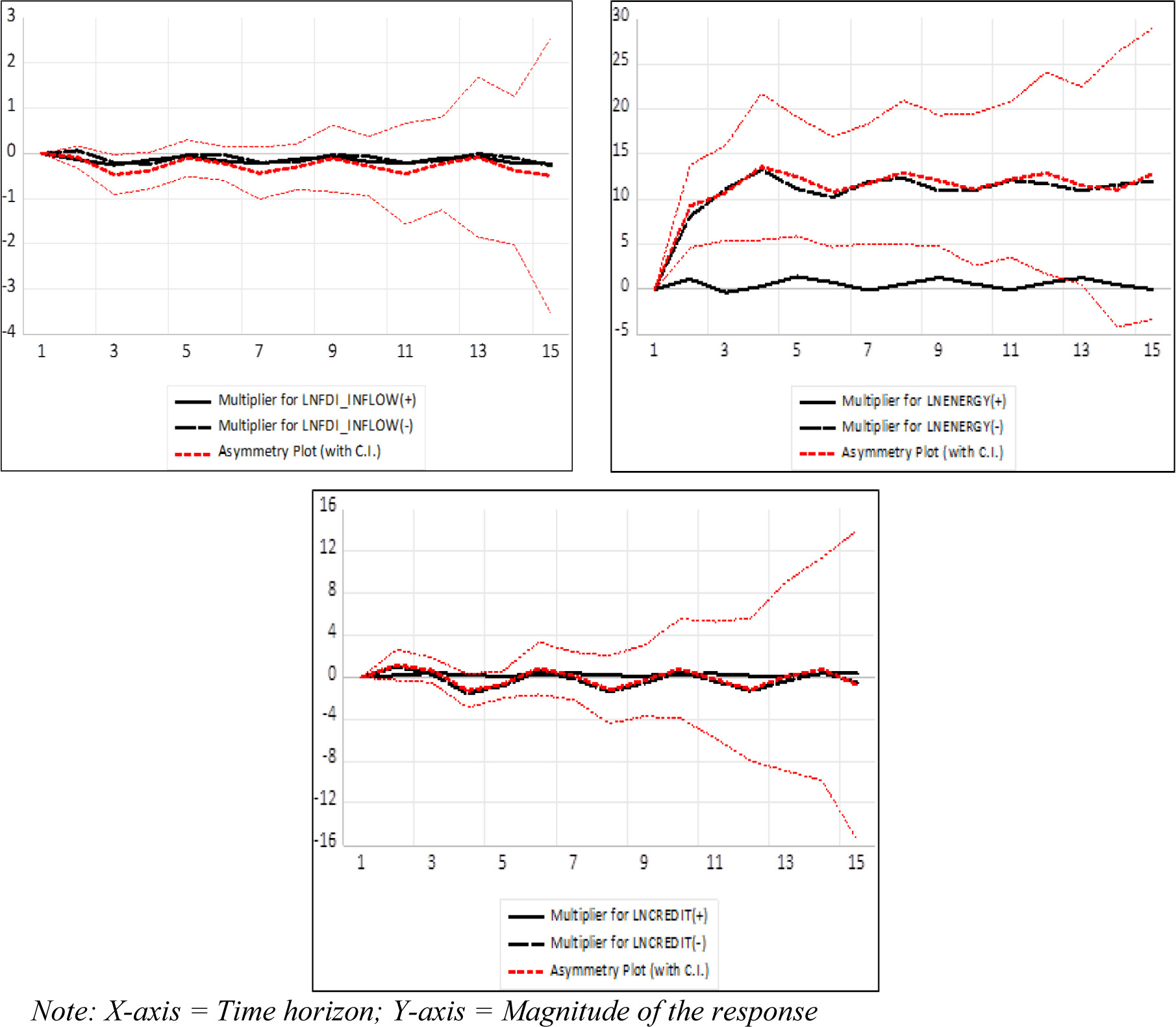
Table 9 presents the outcomes of model residual diagnostic tests, encompassing evaluations for autocorrelation, heteroscedasticity, Ramsey RESET, and normality. The tests indicate that the null hypotheses regarding autocorrelation, heteroscedasticity, model stability, and normality are not rejectable.
Results of diagnostic tests
Diagnostic tests |
F-statistic |
P -value |
|---|---|---|
Serial correlation (LM) test |
0.847 |
0.468 |
Heteroskedasticity test (BPG) |
0.256 |
0.994 |
RESET test |
2.322 |
0.166 |
Normality test |
3.333 |
0.189 |
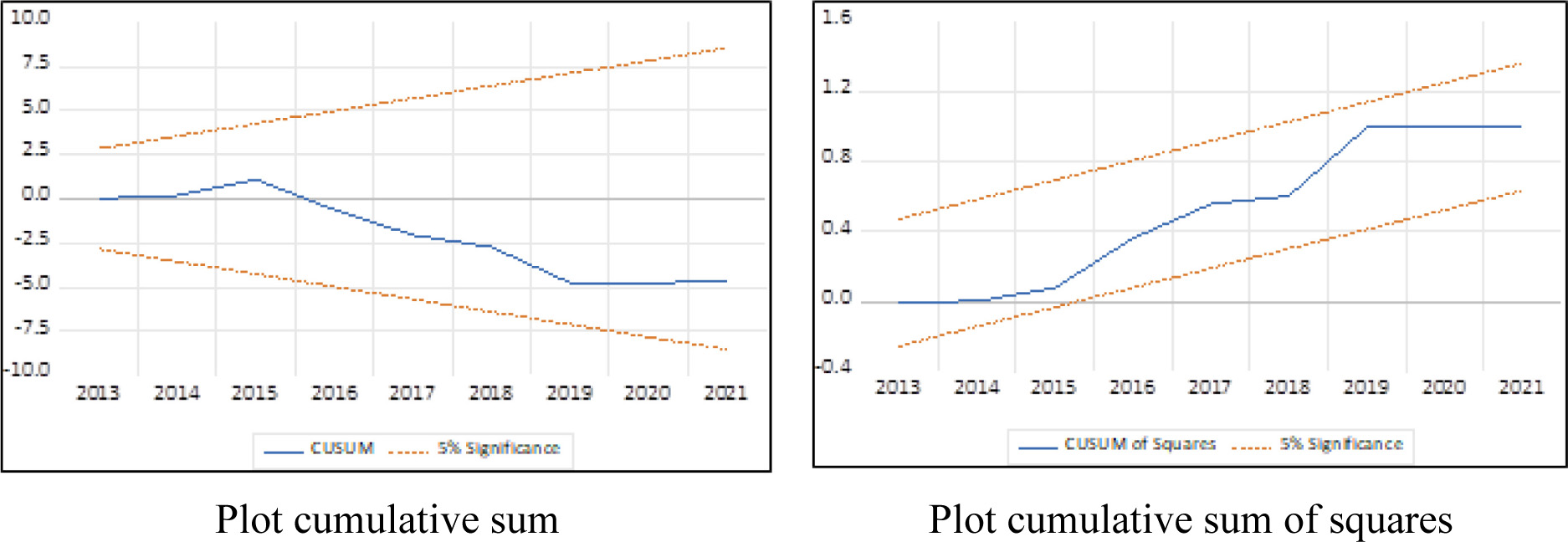
Additionally, Figure 4 displays the CUSUM and CUSUMSQ tests for the model. These graphs demonstrate the model’s stability, as evidenced by the significant lines falling within the critical boundaries.
Plots showing cumulative sum (left) and cumulative sum of squares (right)
The analysis in Table 6 reveals that both positive and negative fluctuations in FINDE significantly contribute to environmental degradation by increasing
These findings extend the work of Patel et al. [54], who identify a nonlinear negative correlation between financial shocks and
In the present study, unbalanced correlations were detected between ENERGY and
Positive shocks to FDIIN result in a long-term decrease in
One should note that countries like Malaysia and Thailand have also benefitted from foreign direct investment inflows that introduce cleaner technologies, sustainable practices, and energy-efficient production processes. These innovations have contributed to environmental improvements over time [89]. However, these benefits are contingent on attracting high-quality foreign direct investment targeted at green industries, renewable energy, and eco-friendly infrastructure. The insignificant impact of negative foreign direct investment shocks in Vietnam may reflect the relatively small scale of environmentally harmful investments in the country, a trend also noted in some regional counterparts. This finding underscores the importance of regional efforts to attract environmentally responsible foreign direct investment while implementing strict environmental standards to maximise the long-term sustainability benefits of such inflows. Moreover, these observations strengthen the study’s relevance to Southeast Asia regions.
The GDP per capita in Vietnam exhibits a substantial positive correlation with
In the short term, the results in Table 7 indicate that prior levels of
The asymmetric impacts of ENERGY on
Similarly, the NARDL model indicates that a negative shock to ENERGY leads to a reduction in
A positive shift in foreign direct investment inflows significantly reduces
However, this finding does not align with Hoa et al. [90], whose research finds that foreign direct investment has a positive impact on carbon emissions. Differences in methodology and timeframe can explain the contrasting findings. Using a NARDL model, the current study highlights that positive shocks to foreign direct investment reduce
Similarly, GDPPC in Vietnam demonstrates a positive impact on environmental quality, as can be seen by a 1% increase in GDPPC leading to a significant 2.630% reduction in
This study utilises the NARDL model to analyse the interrelationships between financial development, energy consumption, foreign direct investment, and CO2 emissions in Vietnam from 1990 to 2021, incorporating economic growth as a control variable. The analysis reveals significant disparities in the impact of financial development, energy consumption, and foreign direct investment on CO2 emissions throughout short- and long-term periods. The results demonstrate that Vietnam’s long-term financial development does not inherently compromise environmental sustainability. In the long run, negative shocks to energy consumption significantly increase CO2 emissions, whereas positive shocks have no discernible effect. Meanwhile, the positive shocks in foreign direct investment reduce CO2 emissions in both the short and long term, supporting the “pollution halo” hypothesis. Conversely, negative shocks to foreign direct investment have an insignificant impact on emissions, likely reflecting the relatively small scale of foreign direct investment inflows in Vietnam. Notably, the short-term environmental benefits of foreign direct investment appear to extend into the long term. Economic growth has mixed effects on emissions. In the short term, GDP growth may reduce emissions by fostering cleaner technologies and improving production efficiency. However, sustained economic expansion drives higher emissions in the long run, which are attributable to heightened energy demand and industrial operations. This dual effect highlights the need for a balanced approach to economic development that integrates environmental considerations.
Vietnam’s significant dependence on fossil fuels, including coal, oil, and gas, exacerbates carbon emissions during disruptions in energy consumption, highlighting the structural challenges the country may face in its transition to cleaner energy sources. This study offers valuable insights for Vietnam as it pursues economic restructuring towards sustainability. This process involves optimising the advantages of financial development, foreign investment influx, and energy utilisation while alleviating their detrimental impacts. Policymakers should implement a comprehensive strategy to mitigate the negative environmental effects of financial development, energy consumption, and economic expansion while capitalising on the environmental advantages of foreign direct investment.
First, it is crucial that policymakers integrate environmental considerations into financial sector regulations in order to reduce the detrimental impact of financial development on CO2 emissions. Policymakers could incentivise green lending practices, promote sustainable investment portfolios, and establish a robust framework for green finance initiatives. These measures are particularly important given the study’s finding that positive shocks to financial development can reduce emissions while negative shocks increase them. These results demonstrate that it is possible for sustainable financial growth to align with environmental goals.
Second, accelerating the transition to a diversified and sustainable energy mix is imperative, given the rise in emissions that followed negative energy shocks in this study’s model. This finding suggests that Vietnam should implement energy efficiency measures, expand the adoption of renewable energy sources, and gradually phase out carbon-intensive fossil fuels, particularly coal. Such efforts would enhance energy resilience and render Vietnam’s energy consumption less carbon-intensive.
Third, to fully realise the environmental benefits of foreign direct investment, Vietnam should prioritise attracting foreign investments in clean technologies, renewable energy, and sustainable industries. Because the study supports the “pollution halo” hypothesis, Vietnam could implement targeted policies – such as stricter environmental regulations and incentives for adopting green practices – to encourage foreign firms to contribute more effectively to Vietnam’s sustainability goals.
Finally, while economic growth may temporarily reduce emissions by causing businesses to adopt cleaner technologies, long-term strategies should aim to decouple economic expansion from environmental degradation. This strategy requires promoting eco-friendly industrialisation, incentivising energy-efficient production processes, and fostering a shift toward a more sustainable, service-oriented economy. These measures would ensure that Vietnam’s economic growth aligns with its environmental and sustainability objectives.
The study describes the correlation among financial development, energy consumption, foreign direct investment, and CO2 emissions in Vietnam. However, it has several significant limitations. First, the focus on a single country makes it difficult to generalise to other contexts. Second, the use of aggregated country-level data may mask regional or sectoral variation. Third, the short-term analysis does not fully reflect long-term trends or structural changes. To address these limitations, future studies should expand the scope to include additional countries, use more detailed data at the regional or sectoral level, and consider the role of policy, technological progress, institutional quality, and other moderating factors. Comparisons with emerging or developing economies could provide valuable lessons on balancing economic development, an energy economy, and environmental protection.
- ,
“The energy-climate challenge: Recent trends in CO2 emissions from fuel combustion,” ,Energy Policy , Vol. 35 (11), :5938-59522007, https://doi.org/10.1016/j.enpol.2007.07.001 - ,
“International cooperative initiatives and the United Nations Framework Convention on Climate Change,” ,Climate Policy , Vol. 18 (5), :655-6632018, https://doi.org/10.1080/14693062.2017.1321522 - ,
“Climate Change 2023 Synthesis Report: A Report of the Intergovernmental Panel on Climate Change,” ,Intergovernmental Panel on Climate Change (IPCC) , 2023, https://doi.org/10.1017/9781009157988, IPCC - ,
“Environmental Sustainability in Asean: What Roles Do Energy Consumption, Economic Growth, and Foreign Direct Investment Play?,” ,Environ Dev Sustain , 2024, https://doi.org/10.1007/s10668-024-05250-9 - ,
“Impact of Renewable and Non-Renewable Energy on EKC in SAARC Countries: Augmented Mean Group Approach,” , 2023, https://doi.org/10.3390/en16062789 - ,
“World Energy Outlook 2023,” , 2023https://www.iea.org/reports/world-energy-outlook-2023, [Online]. Available:[Accessed: May 13,2025]. - ,
“Does nuclear energy reduce carbon emissions despite using fuels and chemicals? Transition to clean energy and finance for green solutions,” ,Geoscience Frontiers , Vol. 15 (4), :1016082024, https://doi.org/10.1016/j.gsf.2023.101608 - ,
“The Nexus of Renewable, Non-Renewable Energy and Ecological Footprint with Mediating Effects of Economic Development: Evidence from a Global Sample,” ,Reference Module in Social Sciences , 2024, https://doi.org/10.1016/B978-0-44-313776-1.00263-4 - ,
“What Role Renewable Energy Consumption, Renewable Electricity, Energy Use and Import Play in Environmental Quality?,” ,Energy Reports , Vol. 10 , :3826-38342023, https://doi.org/10.1016/j.egyr.2023.10.024 - ,
“Analyze the Environmental Sustainability Factors of China: The Role of Fossil Fuel Energy and Renewable Energy,” ,Renew Energy , Vol. 187 , :390-4022022, https://doi.org/10.1016/j.renene.2022.01.066 - ,
“The Economics of Sustainable Energy Transition and the Circular Economy,” ,Sustainable Energy Transition: Circular Economy and Sustainable Financing for Environmental, Social and Governance (ESG) Practices , 53-872024, https://doi.org/10.1007/978-3-031-52943-6_2 - ,
“Energy Transition: Connotations, Mechanisms and Effects,” ,Energy Strategy Reviews , Vol. 52 , :1013202024, https://doi.org/10.1016/j.esr.2024.101320 - ,
“Analyzing the Green Financing and Energy Efficiency Relationship in Asean,” ,The Journal of Risk Finance , Vol. 23 (4), :385-4022022, https://doi.org/10.1108/jrf-02-2022-0046 - ,
“Impact of Financial Development on Energy Consumption in China: A Spatial Spillover Analysis,” ,Energy Strategy Reviews , Vol. 44 , :1009752022, https://doi.org/10.1016/j.esr.2022.100975 - ,
“Testing the Nexus between Renewable Energy Consumption and Environmental Quality in Nigeria: The Role of Broad-Based Financial Development,” ,African Development Review , Vol. 32 (2), :163-1752020, https://doi.org/10.1111/1467-8268.12425 - ,
“Investigating the Role of Financial Development in Encouraging the Transition to Renewable Energy: A Fractional Response Model Approach,” ,Sustainability , Vol. 16 (18), 2024, https://doi.org/10.3390/su16188153 - ,
“Financial Development, Human Capital and Energy Transition: A Global Comparative Analysis,” ,International Journal of Energy Sector Management , Vol. 19 (1), :59-802024, https://doi.org/10.1108/ijesm-11-2023-0004 - ,
“Does Financial Inclusion Spur CO2 Emissions? The Marginal Effects Of financial Sustainability,” ,IIMBG Journal of Sustainable Business and Innovation , Vol. 1 (2), :77-972023, https://doi.org/10.1108/ijsbi-02-2023-0004 - ,
“Investigating the pollution haven hypothesis in Cote d’Ivoire: evidence from autoregressive distributed lag (ARDL) approach with structural breaks,” ,Environmental Science and Pollution Research , Vol. 27 (14), :16886-168992020, https://doi.org/10.1007/s11356-020-08246-w - ,
“Environmental Degradation in France: The Effects of FDI, Financial Development, and Energy Innovations,” ,Energy Econ , Vol. 74 , :843-8572018, https://doi.org/10.1016/j.eneco.2018.07.020 - ,
“Testing Pollution Haven and Pollution Halo Hypotheses for Turkey: A New Perspective,” ,Environ Sci Pollut Res Int , Vol. 27 (26), :32933-329432020, https://doi.org/10.1007/s11356-020-09469-7 - ,
“Globalization and the Environmental Impact of Sectoral FDI,” ,Economic Systems , Vol. 40 (4), :582-5942016, https://doi.org/10.1016/j.ecosys.2016.02.005 - ,
“An Investigation of the Dynamic Relationships Between Financial Development, Renewable Energy Use, and CO2 Emissions,” ,Sage Open , Vol. 12 (4), :215824402211347902022, https://doi.org/10.1177/21582440221134794 - ,
“Economic Growth, Environmental Regulations, Energy Use, and Ecological Footprint Linkage in the Next-11 Countries: Implications for Environmental Sustainability,” ,Energy & Environment , Vol. 34 (5), :1327-13472022, https://doi.org/10.1177/0958305X221084293 - ,
“The impacts of GDP, trade structure, exchange rate and FDI inflows on China’s carbon emissions,” ,Energy Policy , Vol. 120 , :347-3532018, https://doi.org/10.1016/j.enpol.2018.05.056 - ,
“Asymmetric effects of energy consumption and economic growth on ecological footprint: new evidence from Pakistan,” ,Environmental Science and Pollution Research , Vol. 28 (25), :32945-329612021, https://doi.org/10.1007/s11356-021-13130-2 - ,
“Reexamining the impact of foreign direct investment on carbon emissions: does per capita GDP matter?,” ,Humanit Soc Sci Commun , Vol. 10 (1), :4062023, https://doi.org/10.1057/s41599-023-01895-5 - ,
“Vietnam needs extra 368 billion USD to achieve net zero emissions.” , https://moit.gov.vn/en/news/ministerial-leaders-activities/vietnam-needs-extra-368-billion-u sd-to-achieve-net-zero-emissions.html, MOIT, [Online]. Available:[Accessed: May 13,2025]. - ,
“Panel ARDL and Nardl Models: Role of Agriculture in Economic Growth in Selected Asian Countries,” ,Applied Econometric Analysis Using Cross Section and Panel Data , 471-5032023, https://doi.org/10.1007/978-981-99-4902-1_16 - ,
“Exploring Symmetric and Asymmetric Nexus between Corruption, Political Instability ,Natural Resources and Economic Growth in the Context of Pakistan,” Resources Policy , Vol. 78 , :1027852022, https://doi.org/10.1016/j.resourpol.2022.102785 - ,
“Modelling for Insight: Does Financial Development Improve Environmental Quality?,” ,Energy Econ , Vol. 83 , :156-1792019, https://doi.org/10.1016/j.eneco.2019.06.025 - ,
“Revisiting financial development and renewable energy electricity role in attaining China’s carbon neutrality target,” ,J Environ Manage , Vol. 297 , :1133352021, https://doi.org/10.1016/j.jenvman.2021.113335 - ,
“The impact of financial development, economic growth and energy consumption on environmental degradation,” ,Management of Environmental Quality:An International Journal , Vol. 26 (5), :666-6822015, https://doi.org/10.1108/meq-05-2014-0063 - ,
“The Long-Run Effect of Financial Development on Carbon Emissions in Kazakhstan,” ,Energy Effic , Vol. 17 (3), :172024, https://doi.org/10.1007/s12053-024-10201-4 - ,
“Financial Development and Environmental Degradation: Do Human Capital and Institutional Quality Make a Difference?,” Gondwana Research , Vol. 105 , :299-3102022, https://doi.org/10.1016/j.gr.2021.09.012 - ,
“Digital financial development and ecological footprint: Evidence from green-biased technology innovation and environmental inclusion,” ,J Clean Prod , Vol. 380 , :1350692022, https://doi.org/10.1016/j.jclepro.2022.135069 - ,
“The consumption response to positive and negative income shocks,” ,J Monet Econ , Vol. 96 , :1-152018, https://doi.org/10.1016/j.jmoneco.2017.11.007 - ,
“Lending Growth During the Financial Crisis and the Sovereign Debt Crisis: The Role of Bank Ownership Type,” ,Journal of International Financial Markets,Institutions and Money , Vol. 41 , :168-1822016, https://doi.org/10.1016/j.intfin.2015.12.011 - ,
“The Effect of Financial Development on Industrial Green Technology Innovation Efficiency: Experience Analysis from 288 Cities in ,China,”Sustainability , Vol. 16 (13), 2024, https://doi.org/10.3390/su16135619 - ,
“Role of financial inclusion, green innovation, and energy efficiency for environmental performance? Evidence from developed and emerging economies in the lens of sustainable development,” ,Structural Change and Economic Dynamics , Vol. 64 , :213-2242023, https://doi.org/10.1016/j.strueco.2022.12.008 - ,
“Do green bonds reduce CO2 emissions? Evidence from developed and developing nations,” ,International Journal of Emerging Markets , Vol. ahead-of-print (ahead-of-print), 2023, https://doi.org/10.1108/IJOEM-05-2023-0765 - ,
“Does Economic Growth Stimulate Energy Consumption? The Role of Human Capital and R&D Expenditures in China,” ,Energy Econ , Vol. 105 , :1056622022, https://doi.org/10.1016/j.eneco.2021.105662 - ,
“Digital inclusive finance and energy transition towards carbon neutrality: Evidence from Chinese firms,” ,Energy Econ , Vol. 127 , :1070592023, https://doi.org/10.1016/j.eneco.2023.107059 - ,
“Does green direct financing work in reducing carbon risk?,” ,Econ Model , Vol. 128 , :1064952023, https://doi.org/10.1016/j.econmod.2023.106495 - ,
“The Relationship between CO2 Emissions and Financial Development,” ,The Singapore Economic Review , Vol. 60 (05), :15501172015, https://doi.org/10.1142/s0217590815501179 - ,
“Moderating the Effect of Globalization on Financial Development, Energy Consumption, Human Capital, and Carbon Emissions: Evidence from G20 Countries,” ,Environmental Science and Pollution Research , Vol. 28 (26), :35126-351442021, https://doi.org/10.1007/s11356-021-13116-0 - ,
“Green Bonds as a Tool against Climate Change?,” ,Bus Strategy Environ , Vol. 30 (5), :2688-27012021, https://doi.org/10.1002/bse.2771 - ,
“Patterns of Interdependence between Financial Development, Fiscal Instruments, and Environmental Degradation in Developed and Converging EU Countries,” ,Int J Environ Res Public Health , Vol. 17 (12), 2020, https://doi.org/10.3390/ijerph17124425 - ,
“Does the Moderating Role of Financial Development on Energy Utilization Contributes to Environmental Sustainability in GCC Economies?,” ,Energies (Basel) , Vol. 15 (13), 2022, https://doi.org/10.3390/en15134663 - ,
“The Role of Economic Growth, Financial Development, Globalization, Renewable Energy and Industrialization in Reducing Environmental Degradation in the Economic Community of West African States,” ,Cogent Economics & Finance , Vol. 12 (1), :23086752024, https://doi.org/10.1080/23322039.2024.2308675 - ,
“Financial Development and Environmental Quality: Differences in Renewable Energy Use and Economic Growth,” ,Pol J Environ Stud , 2023, https://doi.org/10.15244/pjoes/157652 - ,
“How Does Financial Development Influence Carbon Emission Intensity in the Oecd Countries: Some Insights from the Information and Communication Technology Perspective,” ,J Environ Manage , Vol. 335 , :1175532023, https://doi.org/10.1016/j.jenvman.2023.117553 - ,
“The Mediating Effect of Financial Development on CO2 Emissions: An Empirical Study Based on Provincial Panel Data in China,” ,Science of The Total Environment , Vol. 896 , :1652202023https://doi.org/j.scitotenv.2023.165220 - ,
“The asymmetry effect of industrialization, financial development and globalization on CO2 emissions in India,” ,International Journal of Thermofluids , Vol. 20 , :1003972023, https://doi.org/10.1016/j.ijft.2023.100397 - ,
“U-shaped Relationship between Financial Development and Greenhouse Gases in Vietnam: ARDL Bound Test Approach,” ,Pol J Environ Stud , 2025, https://doi.org/10.15244/pjoes/196733 - ,
“The Role of Renewable Energy Technologies in Enhancing Human Development: Empirical Evidence from Selected Countries,” ,Case Studies inChemical and Environmental Engineering , Vol. 8 , :1004962023, https://doi.org/10.1016/j.cscee.2023.100496 - ,
“The Role of Renewable Energy, Fossil Fuel Consumption, Urbanization and Economic Growth on CO2 Emissions in China,” ,Energy Reports , Vol. 7 , :783-7912021, https://doi.org/10.1016/j.egyr.2021.09.194 - ,
“Environmental Concerns in the United States: Can Renewable Energy, Fossil Fuel Energy, and Natural Resources Depletion Help?,” ,Gondwana Research , Vol. 117 , :41-552023, https://doi.org/10.1016/j.gr.2022.12.021 - ,
“Energy consumption and environmental sustainability: What lessons for posterity?,” ,Energy Reports , Vol. 8 , :12491-125022022, https://doi.org/10.1016/j.egyr.2022.09.033 - ,
“Revisiting the determinants of carbon emissions for Turkey: the role of construction sector,” ,Environmental Science and Pollution Research , Vol. 28 (31), :42325-423382021, https://doi.org/10.1007/s11356-021-13722-y - ,
“The Impact of Hydropower Energy Consumption on Economic Growth and CO2 Emissions in China,” ,Environmental Science and Pollution Research , Vol. 25 (35), :35725-357372018, https://doi.org/10.1007/s11356-018-3525-6 - ,
“Environmental Impact of Solar and Wind Energy- a Review,” ,Journal of Sustainable Development of Energy,Water and Environment Systems , Vol. 10 (2), :1-232022, https://doi.org/10.13044/j.sdewes.d9.0387 - ,
“The Wind Energy-Greenhouse Gas Nexus: The Wavelet-Partial Wavelet Coherence Model Approach,” ,J Clean Prod , Vol. 245 , :1188722020, https://doi.org/10.1016/j.jclepro.2019.118872 - ,
“The Co-Movements between Geothermal Energy Usage and CO2 Emissions through High and Low Frequency Cycles,” ,Environmental Science and Pollution Research , Vol. 28 (45), :63723-637382021, https://doi.org/10.1007/s11356-020-11000-x - ,
“An empirical analysis of the non-linear effects of natural gas, nuclear energy, renewable energy and ICT-Trade in leading CO2 emitter countries: Policy towards CO2 mitigation and economic sustainability,” ,J Environ Manage , Vol. 286 , :1122322021, https://doi.org/10.1016/j.jenvman.2021.112232 - ,
“The Symmetric and Asymmetric Impacts of Energy Consumption and Economic Growth on Environmental Sustainability,” ,Sustainability , Vol. 16 (1), 2024, https://doi.org/10.3390/su16010205 - ,
“The Critical Review of the Pollution Haven Hypothesis,” ,International Journal of Energy Economics and Policy , Vol. 8 (1), :167-1742018https://econjournals.org.tr/index.php/ijeep/article/view/5678/3519, [Online]. Available:[Accessed: May 13,2025]. - ,
“How does foreign direct investment contribute to Sustainable Development Goals? Evidence from African countries,” ,J Clean Prod , Vol. 245 , :1188232020, https://doi.org/10.1016/j.jclepro.2019.118823 - ,
“Does foreign direct investment asymmetrically affect the mitigation of environmental degradation in Malaysia?,” ,Environmental Science and Pollution Research , Vol. 29 (5), :739374052022, https://doi.org/10.1007/s11356-021-16231-0 - ,
“Impact of foreign direct investment and urbanisation on CO2 emissions in Vietnam,” ,International Journal of Business and Globalisation , Vol. 27 (3), :313-3322021, https://doi.org/10.1504/ijbg.2021.113276 - ,
“Correlation between Nitrous Oxide Emissions and Economic Growth in Vietnam: An Autoregressive Distributed Lag Analysis,” ,Environ Technol Innov , Vol. 29 , :1029892023, https://doi.org/10.1016/j.eti.2022.102989 - ,
“The Impact of Trade, Foreign Direct Investment (FDI), and Economic Growth on Carbon Dioxide (CO2) Emissions in Selected Asian Countries,” ,UNIMAS Review of Accounting and Finance , Vol. 7 (1), :74-932023, https://doi.org/10.33736/uraf.5205.2023 - ,
“How do foreign direct investment flows affect carbon emissions in BRICS countries? Revisiting the pollution haven hypothesis using bilateral FDI flows from OECD to BRICS countries,” ,Environmental Science and Pollution Research , Vol. 30 (6), :14680-146922023, https://doi.org/10.1007/s11356-022-23185-4 - ,
“The Impacts of FDI Inflows on Carbon Emissions: Economic Development and Regulatory Quality as Moderators,” ,Front Energy Res , Vol. 9 , 2022, https://doi.org/10.3389/fenrg.2021.820596 - ,
“Has technological innovation capability addressed environmental pollution from the dual perspective of FDI quantity and quality? Evidence from China,” ,J Clean Prod , Vol. 258 , :1209412020, https://doi.org/10.1016/j.jclepro.2020.120941 - ,
“Exploring the asymmetric effect of fiscal policy instruments in encountering environmental degradation: proposing an SDG framework for India,” ,Environmental Science and Pollution Research , Vol. 31 (17), :25907259282024, https://doi.org/10.1007/s11356-024-32756-6 - ,
“Modelling Asymmetric Cointegration and Dynamic Multipliers in a Nonlinear ARDL Framework,” ,Festschrift in Honor of Peter Schmidt: Econometric Methods and Applications , 281-3142014, https://doi.org/10.1007/978-1-4899-8008-3_9 - ,
“Distribution of the Estimators for Autoregressive Time Series with a Unit Root,” ,J Am Stat Assoc , Vol. 74 (366), :427-4311979, https://doi.org/10.2307/2286348 - ,
“Does GNP have a unit root?: A re-evaluation,” ,Econ Lett , Vol. 23 (2), :139-1451987, https://doi.org/10.1016/0165-1765(87)90027-9 - ,
“A test for independence based on the correlation dimension,” ,Econom Rev , Vol. 15 (3), :1972351996, https://doi.org/10.1080/07474939608800353 - ,
“Oil and food prices in Malaysia: a nonlinear ARDL analysis,” ,Agricultural and Food Economics , Vol. 3 (1), :22015, https://doi.org/10.1186/s40100-014-0020-3 - ,
“Environmental Impacts of Household Energy Use in Asean-5 Countries: Are There Asymmetric Effects?,” ,Energy Policy , Vol. 182 , :1137712023, https://doi.org/10.1016/j.enpol.2023.113771 - ,
“Do Asymmetric Financial Development Shocks Matter for CO2 Emissions in Africa? A Nonlinear Panel ARDL-Pmg Approach,” ,Environmental Modeling & Assessment , Vol. 25 (6), :809-8302020, https://doi.org/10.1007/s10666-020-09722-w - ,
“Industrial Growth and CO2 Emissions in Vietnam: The Key Role of Financial Development and Fossil Fuel Consumption,” ,Environmental Science and Pollution Research , Vol. 28 (6), :7515-75272020, https://doi.org/10.1007/s11356-020-10996-6 - ,
“Financial Inclusion and Inclusive Development in Indonesia,” ,Challenges of Governance : Development and Regional Integration in Southeast Asia and ASEAN , 161-1812021, https://doi.org/10.1007/978-3-030-59054-3_8 - ,
“Relationship Between Financial and Real Sectors: Implications for Stable Economic Development (Evidence from Thailand),” ,Int J Econ Finance , Vol. 10 (6), :2042018, https://doi.org/10.5539/ijef.v10n6p204 - ,
“Assessing the Carbon Footprints of Income Growth, Green Finance, Institutional Quality and Renewable Energy Consumption in Emerging Asian Economies,” ,Capital Markets Review , Vol. 32 (1), :1-272024https://www.mfa.com.my/cmr/v32ilal/, [Online]. Available:[Accessed: May 13,2025] - ,
“The Impact of Energy Consumption, Income and Foreign Direct Investment on Carbon Dioxide Emissions in Vietnam,” ,Energy , Vol. 79 , :4474542015, https://doi.org/10.1016/j.energy.2014.11.033 - ,
“The impacts of transport energy consumption, foreign direct investment and income on CO2 emissions in ASEAN-5 economies,” ,Renewable and Sustainable Energy Reviews , Vol. 24 , :445-4532013, https://doi.org/10.1016/j.rser.2013.03.054 - ,
“Nexus of innovation, renewable consumption, FDI, growth and CO2 emissions: The case of Vietnam,” ,Journal of Open Innovation: Technology,Market, and Complexity , Vol. 9 (3), :1001002023, https://doi.org/10.1016/j.joitmc.2023.100100